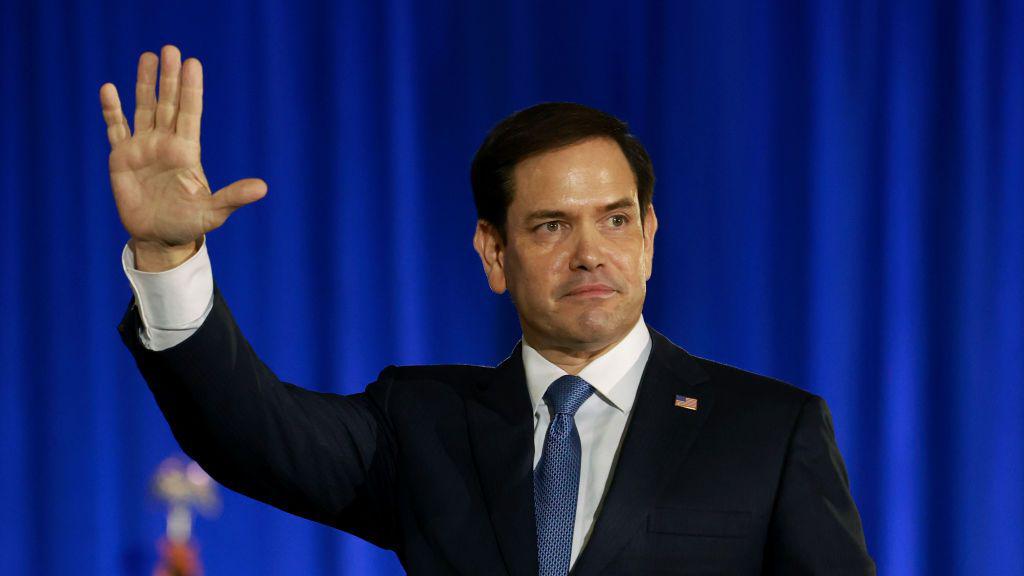
U.S. Senator Marco Rubio has placed the war in Ukraine at the center of a broader global security discussion, warning that conflicts in Eastern Europe, Latin America, and beyond are increasingly interconnected and driven by rising geopolitical competition.
Speaking on international affairs, Rubio emphasized that the Ukraine war cannot be viewed in isolation, arguing that tensions involving Venezuela, China, and the Middle East reflect a wider challenge to U.S. influence and the international order.
Ukraine Still a Central Front
Rubio reaffirmed strong U.S. support for Ukraine, describing Russia’s invasion as a defining moment for global security. He warned that allowing Moscow to succeed would embolden other adversaries and weaken international norms.
According to Rubio, Ukraine represents a frontline defense against authoritarian expansion, with implications far beyond Europe.
Venezuela Returns to the Spotlight
Alongside Ukraine, Rubio highlighted Venezuela as a growing concern. He criticized the Maduro government and warned against policies that could legitimize authoritarian regimes in exchange for short-term economic or political gains.
Rubio argued that Venezuela’s alliances with Russia, China, and Iran make it a strategic issue, not merely a regional or humanitarian crisis.
Global Tensions Are Converging
The senator stressed that today’s conflicts are increasingly linked. From Eastern Europe to Latin America and the Indo-Pacific, Rubio said U.S. adversaries are testing Washington’s resolve across multiple regions at once.
He cautioned that failing to respond decisively in one arena could encourage escalation in others, drawing parallels between Ukraine, Taiwan, and Venezuela.
A Call for Firm U.S. Leadership
Rubio urged consistent and decisive American leadership, emphasizing sanctions enforcement, diplomatic pressure, and strategic alliances. He warned against mixed signals that could undermine credibility or embolden hostile actors.
“The world is watching,” Rubio suggested, noting that U.S. actions — or inaction — will shape global stability for years to come.
What Comes Next
As global tensions continue to rise, Rubio’s remarks reflect a growing view in Washington that foreign policy challenges are no longer isolated events but part of a broader struggle over power and influence.
With Ukraine still at war and Venezuela once again in focus, U.S. decision-makers face mounting pressure to manage multiple crises without triggering wider confrontation.


